


Why Industry-Institution Collaboration Matters Most for Industry-Ready Graduates in 2026 - CEO, EPGI Bangalore
In an era where technology, innovation, and industry expectations are reshaping the global workforce, higher education institutions must evolve beyond traditional teaching models. Drawing from East Point Group of Institutions' experiences, this article explores how strategic industry collaboration is shaping future-ready professionals and sustainable career pathways.
This Story also Contains
- Building Future-Ready Talent Pipelines at East Point
- Platforms for Candid Dialogue: ‘Coffee with HR’ and EPILC
- Measurable Outcomes of Synergistic Ecosystems
- About East Point Group of Institutions
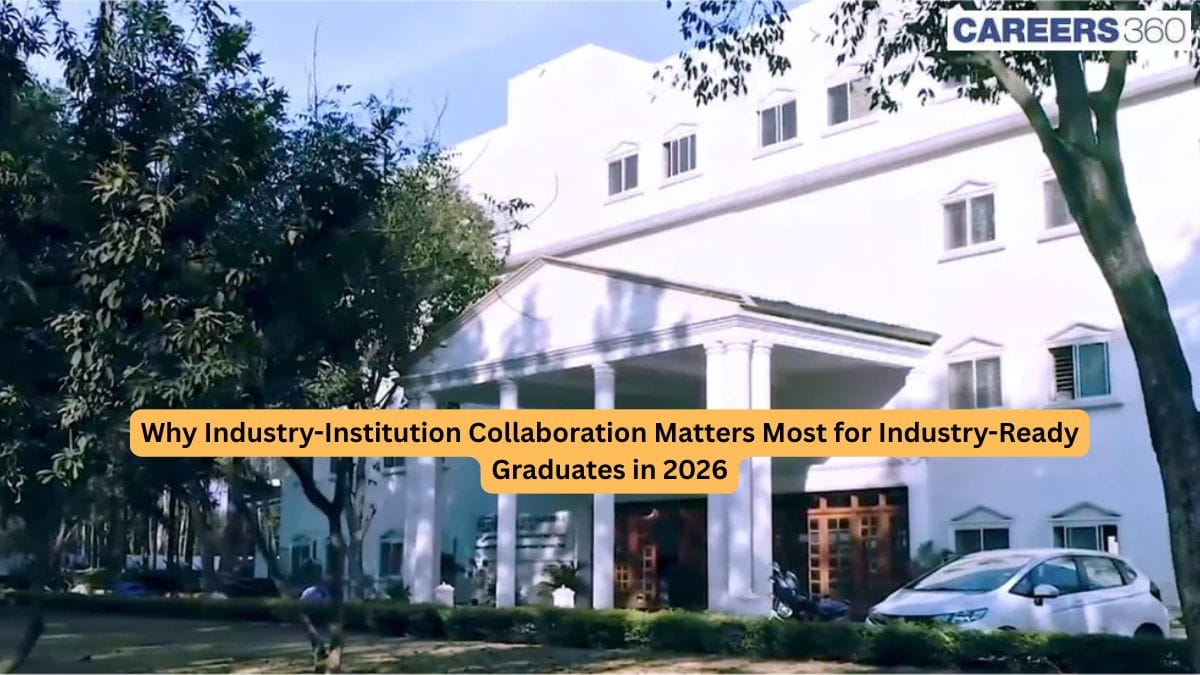
The global employment landscape is undergoing an unprecedented and rapid transformation driven by technological disruption, automation, geopolitical shifts, and evolving corporate expectations. In such a dynamic and fast-paced environment, higher education institutions can no longer afford to rely solely on conventional, isolated academic models. The traditional approach—where an institution operates in a silo and delivers a fixed university curriculum over four years before handing students off to the job market—is fundamentally broken.
Also Read: EPCHE Bangalore Admissions
Today, the defining measure of institutional excellence is how seamlessly academia bridges the gap with employability. At East Point Group of Institutions, we clearly recognise that employers look far beyond academic cumulative grade point averages (CGPAs) or mere scores. Modern organisations seek adaptable global professionals equipped with problem-solving capabilities, technological competence, communication skills, learning agility, and practical exposure to real-world challenges.
To nurture this level of competence, a deep-rooted, structured, and continuous collaboration between industries and educational institutions is not just beneficial—it is imperative.
Building Future-Ready Talent Pipelines at East Point
One of our core philosophies at East Point is that placement is not a transactional, final-year activity. Rather, it is the natural culmination of a carefully structured, multi-year learning experience. When higher education institutions treat corporate recruitment merely as a drive at the end of a degree, they fail their students. True industry readiness must be embedded into the institutional ecosystem from the very first semesters onward.
Through our unique Industry Integrated Learning Program (IILP), implemented alongside the prescribed university curriculum, students undergo industry-relevant certification courses delivered by certified experts. More importantly, every student follows one of our clearly defined career tracks throughout the four-year journey. This structured pathway provides focused mentoring, targeted skill development, and experiential learning aligned with each student's aspirations—ultimately producing purpose-driven professionals.
Also See: EPCHE Bengaluru courses
Platforms for Candid Dialogue: ‘Coffee with HR’ and EPILC
To align an institutional framework with the corporate world, there must be continuous, unfiltered communication between corporate leaders and the campus. We recently hosted two landmark initiatives on our "Jnanaprabha" campus that exemplify this dialogue: "Coffee with HR" (centered on the theme HR Unfiltered) and the East Point Industry Leadership Conclave (EPILC 2026).
During the Coffee with HR panel sessions, senior recruiters from leading organisations provided a realistic, candid view of modern recruitment processes, resume evaluation, and interview expectations. The primary takeaway for our students was clear: while strong academic grades provide a baseline entry point, long-term career success and employability are driven heavily by professional behavior, strong communication skills, confidence, and emotional intelligence.
Similarly, EPILC 2026 brought together senior executives from global sectors—including cloud computing, networking, semiconductors, banking, and product engineering—to deliberate on the theme "Shaping the Future Workforce." The conclave reinforced a vital truth for contemporary educators: sustainable talent pipelines are built through long-term, structural institutional partnerships rather than seasonal recruitment drives.
When an institution listens to industry leaders who emphasise that learning agility and adaptability are now just as crucial as technical expertise, it gains the insights necessary to dynamically enhance its curriculum and experiential learning frameworks.
Also See: EPCHE Bengaluru placements
Measurable Outcomes of Synergistic Ecosystems
When an institution shifts its focus to building a future-ready talent ecosystem, the industry responds with strong endorsement. Our recent EPILC 2026 conclave recorded an overwhelming 90% corporate partnership intent among participating organisations and an impressive satisfaction rating of 4.7 out of 5. This level of corporate validation directly mirrors the quality and market relevance of our graduating cohorts.
Over the past three to five years, this deeper corporate engagement and focus on skill-based hiring has significantly elevated our placement matrix. Our engineering and professional students have seen increased participation from product-based companies, higher internship-to-placement conversion rates, and a widening diversity of roles.
Our student cohorts routinely secure diverse, high-impact profiles. These roles extend from Software Developers, AI/ML Trainees, and Cloud & DevOps Associates to Embedded Systems Engineers, Design Engineers, Business Analysts, and Operations Executives.
About East Point Group of Institutions
Established in 1997 under the visionary leadership of Dr. S.M. Venkatpathi and under the auspices of the M.G. Charitable Trust, the East Point Group of Institutions (EPGI), Bengaluru, has emerged as a beacon of excellence in higher education. Today, it is one of Karnataka's leading multidisciplinary academic ecosystems comprising 12 premier institutions, with over 10,000 students pursuing programmes in Medicine, Engineering, Management, Commerce, Computer Applications, Pharmacy, Nursing, Physiotherapy, Allied Health Sciences, and other disciplines. Spread across a sprawling 100+ acre lush green campus, EPGI is supported by a state-of-the-art 1,200-bedded Multi-Specialty Hospital, providing an integrated environment for quality education, research, innovation, and healthcare.
|
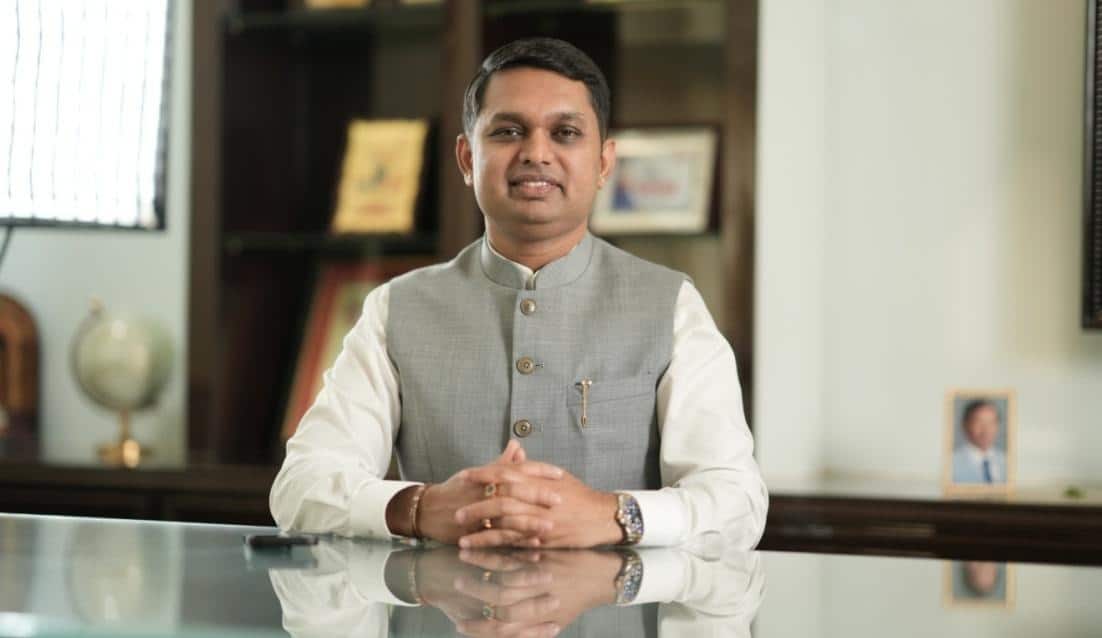
S.V. Rajiv Gowda, CEO, East Point Group of Institutions. |
Disclaimer: This article was distributed by EPGI Bangalore and has been published as a part of Careers360 marketing initiative.
Questions related to East Point College of Higher Education, Bangalore
On Question asked by student community
Hello.
In Order to know the fees structure of your MBA batch please contact the admission cell at you respective university and ask them about it. However, if you wish to get an answer here please update the query and mention the name.of the college/university you are applying for so
BBA is a 3 years Bachelor's degree in Business Administration and there are quite a few top BBA Colleges in India. And a Candidate who has pursued BBA and is working in a Management sector is called a BBA Professional. Admission is through various Entrance examinations. BBA offers exciting career