
Search Colleges, Exams, Schools & more


Login
REVA University Academic Excellence, Innovation and Research Culture: Insights from Careers360 Interview
In this interview between Careers360 and REVA University, the school explains how it mixes classroom theory with hands-on research. They use flexible courses and global standards to help students learn practical work skills. Special campus hubs also guide students to invent new things and start their own businesses. Know more about the courses, admissions, faculty, initiatives and infrastructure at REVA University in the interview below.
Careers360: What academic practices at REVA University contribute most to the learning experiences of students?
REVA University: REVA University's learning experience is shaped by its Choice Based Credit System (CBCS) and Continuous Assessment and Grading Pattern (CAGP), which let students pick core subjects and electives suited to their interests rather than following a rigid curriculum. Academic regulations, framed by the Academic Council, Research and Innovation Council, and Internal Quality Assurance Cell, are periodically revised to stay aligned with regulatory body norms. Schools are encouraged to address local, regional, and futuristic technology needs alongside environmental sensitivity and global relevance. Pedagogy blends experiential and collaborative learning, flipped classrooms, inquiry-based learning, case studies, and technology-aided instruction, moving away from one-directional lecturing. Ethics, gender sensitivity, human values, sustainability, and heritage studies are woven into the curriculum as cross-cutting themes rather than standalone subjects. To ease the transition into university-level study, bridge courses are conducted at the start of each academic session, helping students strengthen language skills and subject-specific fundamentals like mathematics before regular coursework begins.
Also See: REVA University Admissions
Careers360: In what ways do the Academic Council and Internal Quality Assurance Cell contribute to upholding academic standards?
REVA University: The Academic Council and Internal Quality Assurance Cell (IQAC) jointly safeguard REVA University's academic integrity by overseeing the quality of teaching at the undergraduate, postgraduate, and doctoral levels and ensuring corrective action wherever standards slip. They scrutinise proposals for upgrading existing programmes and commission industry-linked research before recommending implementation, ensuring changes are practical rather than cosmetic. The bodies maintain the university's policies, regulations, and document best practices, and extend structural support to faculty during periodic reviews, programme evaluations, and curriculum modifications. They ensure admissions remain merit- and aptitude-based and organise faculty orientation programmes so teachers stay current with modern pedagogy and industry-relevant skills. Beyond teaching, the AC and IQAC also verify that instructional and laboratory infrastructure keeps pace with academic needs and confirms ongoing compliance with regulatory and governing-body requirements. Together, this creates a continuous feedback loop between policy, faculty development, and student outcomes, reinforcing institutional accountability.
Careers360: How does the curriculum ensure a balance between theory and practical application?
REVA University: REVA University blends classroom theory with applied learning through several structured interventions. Workshops, student club activities, short-term projects, and quizzes are built into the academic calendar to keep students engaged beyond textbooks. Multimedia, audio-visual, and ICT-based tools support concept delivery, while inquiry-based learning techniques such as MCQs and quizzing test applied understanding rather than rote memory. Student seminars and workshops give learners a platform to present and defend ideas, sharpening both technical and communication skills. The university also links students to global open-learning platforms like NPTEL, Swayam, Coursera, and edX for self-paced, practice-oriented learning, supplemented by access to e-resources for deeper reading. Group discussions, assignments, and cooperative learning cycles encourage peer-to-peer knowledge exchange and collaborative problem-solving. Collectively, these methods push students to apply concepts actively—through doing, discussing, and demonstrating—rather than only absorbing information passively in lecture halls, narrowing the usual gap between academic theory and workplace-ready skills.
Careers360: How do REVA University's efforts toward standardisation and international quality benchmarks contribute to student satisfaction and overall academic excellence?
REVA University: REVA University has aligned its curriculum design with globally recognised professional bodies, drawing on guidelines from ASME, ASCE, IEEE, and AICTE for engineering programmes, while arts, humanities, management, and science courses follow UGC norms. The university has published a brochure documenting good practices in teaching-learning that mirror international standards, signalling a deliberate effort to benchmark itself rather than operate in isolation. It obtained ISO 9001:2015 certification in 2018, an external validation of its quality-management systems covering processes from instruction to administration. Its infrastructure, including dedicated centres of excellence, supports current research in engineering, sciences, and management, giving students access to facilities comparable to international institutions. The university states it has pursued additional international quality-management certifications specifically to improve student satisfaction, effectiveness, and competitive standing. Research output from these efforts is published in reputable journals, with REVA also securing global patents for some of its innovations, reinforcing the link between standardisation and academic excellence.
Careers360: How does REVA University promote innovation, research, and entrepreneurship?
REVA University: REVA University operates under the philosophy "Educate to Enterprise," structuring its ecosystem to move students from classroom learning into applied innovation and venture-building. The REVA Research Centre anchors academic research, encouraging faculty and students to pursue funded projects and publications across disciplines. The Institution's Innovation Council, aligned with the Ministry of Education's framework, drives a culture of ideation, hackathons, and structured innovation activities among students and staff. For entrepreneurship specifically, REVA Nest functions as a dedicated Technology Business Incubator on campus, registered as a Section 8 company (RAY Foundation) under the Companies Act, 2013, to support student and external innovators in converting ideas into viable businesses. Together, these three arms create a continuum: research generates ideas, the innovation council nurtures and tests them, and the incubator helps translate validated concepts into registered startups, giving students structured pathways into research careers, patent filing, or entrepreneurial ventures rather than treating these as extracurricular add-ons.
Careers360: How effective are the Centres of Excellence in promoting research in engineering, sciences, and management?
REVA University: REVA University's Centres of Excellence (CoEs) function as live experiential learning ecosystems rather than conventional labs, giving students direct exposure to engineering, construction, design, manufacturing, and infrastructure development alongside academic study. Their effectiveness lies in treating industry exposure as part of the core curriculum rather than a separate internship, so students interact with real projects, professionals, and live technical challenges throughout their degree instead of in a short observational stint. The CoEs also pull industry directly into classrooms, with experts conducting lecture series and practical sessions on real-time challenges in areas like commercial infrastructure, sustainability, and project management, helping students connect theory with workplace expectations early. By combining structured academic partnerships, hands-on project access, and consultancy-style engagement, the CoEs give engineering, science, and management students an applied research grounding that mirrors how medical students learn through clinical exposure, building competence, confidence, and field-readiness well before graduation.
Careers360: What role does the Centre of Excellence in Digital Construction Technology (CoEDCT) play at REVA University?
REVA University: The CoEDCT was developed with DivyaSree Developers, parent company of REVA University, in academic partnership with IISc, IIT Delhi, and IIT Madras, to close the long-standing gap between engineering theory and hands-on industry practice. Students get sustained exposure to DivyaSree's commercial, residential, and IT park projects, observing how planning, design, structural execution, and coordination unfold in real time rather than through simulated exercises. The centre is also driving applied research: Building Information Management (BIM) systems are being developed jointly by Civil, Mechanical, and Architecture departments; Compressed Stabilised Earth Blocks (CSEB) are being piloted under an IISc professor for sustainable construction; and over Rs 1 crore has been invested in 3D concrete printing technology, with plans for live printed structures on campus. Architecture students train on Rhino and Grasshopper for computational design, while Mechanical Engineering students work on additive and subtractive manufacturing systems, giving the CoEDCT a genuinely multidisciplinary, research-driven character.
Careers360: Are there any standout initiatives that encourage student-led projects or startups?
REVA University: REVA Nest stands out as the university's flagship entrepreneurship initiative, established as a Technology Business Incubator to nurture student-led startups and incubate innovative, technology-driven ventures on campus. Structured as RAY Foundation (REVA Aspiring Youth Foundation), a Section 8 company under the Companies Act, 2013, it gives the incubator a formal, non-profit institutional identity. Faculty members and industry mentors associated with REVA Nest guide incubated companies across the startup lifecycle, advising on technology product development, patenting, commercialisation, marketing, business setup, operations, and human resource sourcing. The incubator is recognised by the MSME ministry and receives support from the Government of Karnataka's Department of Science and Technology, lending it credibility and access to government schemes. REVA Nest also taps into the university's existing Centres of Excellence in Electronics and Communication, Design and Manufacturing, Construction, and Biotechnology, and runs creative programmes for aspiring entrepreneurs in thrust areas such as IoT, Electronic System Design and Manufacturing (ESDM), robotics, clean energy, and art and design.
Careers360: How are faculty members adapting to new teaching functions as they move toward a learner-centred approach, and what teaching methods are used?
REVA University: Faculty at REVA University are shifting from being sole information-providers to facilitators of a learner-centred model, requiring them to take on new functions beyond traditional lecturing. The university formally employs five teaching methods: direct instruction for foundational lecture-based delivery; flipped classrooms, where students study material in advance and use class time to clarify doubts with instructors; kinesthetic learning, particularly in engineering and science labs, where students learn through hands-on practical work rather than passive observation; inquiry-based learning, where faculty act as guides while students take an active, project-based role in their own learning; and personalised learning, where teachers assign self-study topics, blend traditional instruction with online material, and continuously track individual student progress, adjusting learning plans as needed. This range of methods requires faculty to design coursework differently for each mode, monitor student engagement more closely, and incorporate technology and self-paced resources, marking a deliberate move away from one-size-fits-all classroom teaching.
Careers360: How do faculty members support students beyond the classroom?
REVA University: Faculty support at REVA extends well beyond academic instruction through a structured one-on-one mentoring system, where each mentor is responsible for a small group of 15 to 20 students. Students are actively encouraged to share academic, personal, career, and psychological concerns with their assigned mentor, who provides guidance and helps resolve issues, including social pressures or confidence-related challenges some students face. This is reinforced institutionally: parent-teacher meetings are held once a semester to share feedback on facilities, teaching quality, and mentoring effectiveness, while keeping parents informed of their ward's academic progress. The Office of the Dean of Student Welfare offers further support for students navigating personal difficulties that could affect their academic or professional trajectory. Practical student-welfare measures include a 10-bed on-campus hospital staffed by a resident doctor and round-the-clock duty nurses, MoUs with corporate hospitals for emergencies, supervised hostel accommodation with regular feedback on facilities and food, and remedial classes for students who underperform in internal assessments.
Careers360: What initiatives has REVA University introduced to promote gender inclusivity, such as courses like Gender Studies?
REVA University: REVA University promotes gender inclusivity through dedicated student-led structures rather than a single classroom course alone. Student clubs focused on gender issues provide peer platforms for awareness, discussion, and advocacy around gender equity on campus. The Sparsh forum operates as a specific support and outreach mechanism addressing gender-related concerns among students and staff complementing the broader mentoring and student-welfare systems. The university's Women's Education initiative further underscores its institutional commitment to gender inclusivity, positioning women's access to and success in higher education as a distinct priority area rather than a peripheral concern. These structures work alongside the university's general student-welfare architecture, including mentoring and the Dean of Student Welfare's office, ensuring gender-related issues have dedicated channels for redress rather than being folded entirely into generic counselling.
Careers360: What impact do infrastructure and research facilities have on the overall experience at REVA University?
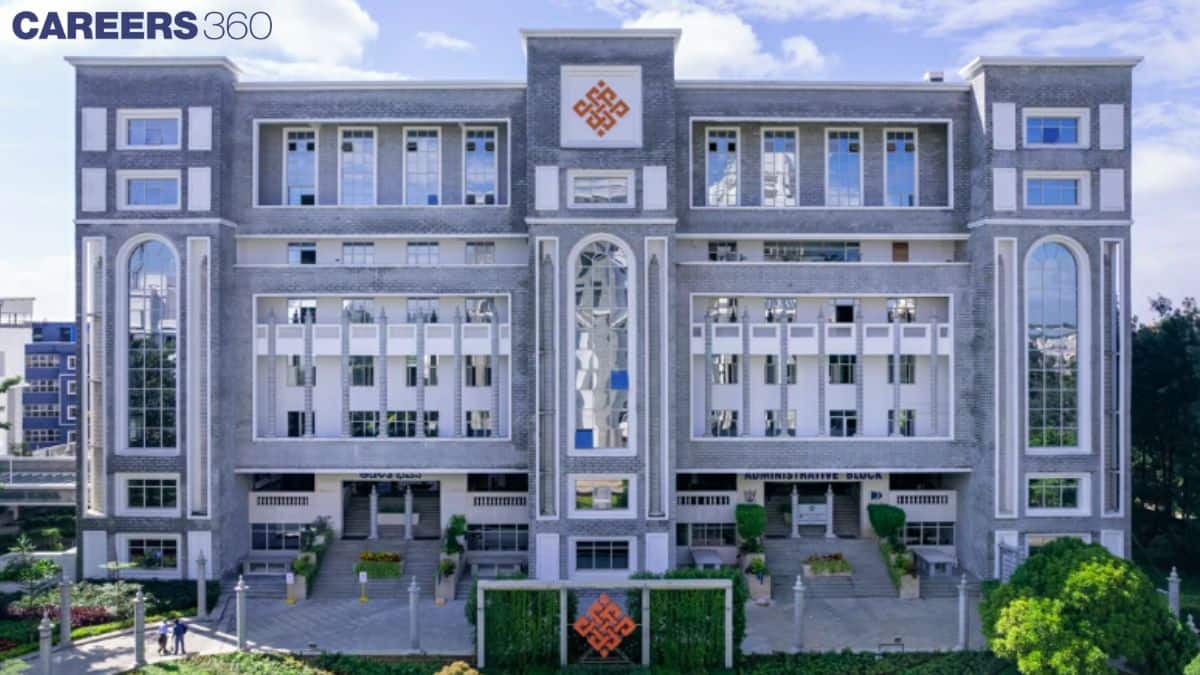
REVA University: REVA's campus is built to support learning well beyond classroom hours, with biodiversity-rich grounds, study lawns, and an open-air theatre woven into the academic environment. Core infrastructure includes well-equipped classrooms, advanced laboratories, seminar halls, dedicated research centres, and a Central Library spread across 35,680 sq. ft. of carpet area. On the research side, the Research and Development Cell coordinates interdisciplinary work across engineering, applied sciences, commerce, management, arts, law, and performing arts, supported by school-level "research circles" mentored by senior faculty to build a research culture among both students and staff. Thrust areas span fields as varied as VLSI and electric-vehicle technology to gender studies and cancer research, giving students wide exposure regardless of discipline. The Research and Innovation Club channels motivated students into interdisciplinary projects and competitions such as hackathons, IoT challenges, and SAE events, where REVA students have won national accolades — directly linking infrastructure investment to measurable student achievement and employability.
Disclaimer: This content was distributed by REVA University and has been published as part of Careers360’s marketing initiative.
Articles
Upcoming University Exams

Certifications By Top Providers
Explore Top Universities Across Globe
Questions related to REVA University Bangalore
On Question asked by student community
Have a question related to REVA University Bangalore ?
Hello Dear Student,
Yes, with a COMEDK rank of 18,800 , you have a realistic chance of getting B.Tech CSE (AI & ML) at REVA University.
Recent cutoff data shows that the closing rank for CSE (Artificial Intelligence & Machine Learning) at REVA through COMEDK has extended beyond 18,800 in
Hello Dear Student,
At REVA University, Bangalore, the B.Tech in CSE with a specialization in Artificial Intelligence and Machine Learning (AI & ML) typically ranges from 6.75 Lakhs to 12 Lakhs in total tuition fees, depending on the admission route.
You can check, find and access more information here:
https://www.careers360.com/university/reva-university-bangalore/courses
Hello. Can you please specify which entrance exam you have appeared for and which course you are trying to secure admission.
The fees for MSc Bioinformatics for the year 2026 is yet to be announced. As for the placements, during the latest one, the highest package secured was Rs. 40 LPA. As per the NIRF data, 1268 out of 1763 graduates were placed with a median salary of Rs 5 LPA,
For M.Sc. Clinical Embryology at Reva University (Bangalore), admission is usually based on merit in graduation (B.Sc. in Life Sciences, Biotech, Zoology, Microbiology, etc.). The university conducts its own entrance test called REVA CET for many programs, but for M.Sc. Clinical Embryology, most seats are offered on direct merit basis

Applications for Admissions are open.
Top B-School: Ranked #9 in NIRF Management Rankings 2025.
International Institute of Business Studies, Bangalore
ApplyNAAC A-Grade | UGC Autonomous
International School of Management Excellence, Bangalore
ApplyTop B School in South | Pre-Placement Offers | Higher Stipends
Indian Institute of Forest Management, Bhopal
ApplyHighest CTC- 21 LPA | Average CTC- 10.38 LPA | Scholarships Available
Indian Institute of Art and Design, New Delhi
ApplyLeading Design College | 95% Placement Record | Merit-cum-Means Scholarships for Deserving Students
International School of Business and Media, Pune
ApplyHighest CTC 20.56 LPA | Average CTC 11.4 LPA | 250+ Recruiters | 2nd Position in Pune.