IIT JAM Question with Solutions 2025: The Indian Institute of Technology Joint Admission Test for Masters, also called IIT JAM, is like a national-level entrance exam for securing admission into M.Sc, Joint M.Sc.-Ph.D., and a handful of other science postgraduate courses that are offered by IITs as well as IISc. Basically, the test tries to see how well candidates can absorb the core subjects, and also it checks analytical skills, plus problem-solving power, in fields such as Physics, Chemistry, Mathematics, and Biotechnology. This write-up has the full IIT JAM 2025 question paper along with detailed explanations, so it works like a handy reference for aspirants who are planning for later tries, such as IIT JAM 2026.
IIT JAM Question Paper with Solutions 2025: Chemistry
IIT JAM Chemistry memory-based questions 2025 with solutions are mentioned below.
Q1. Acidity order of aqua complexes having coordination number 6 of Al3+, Fe2+, and Fe3+
$\mathrm{Fe}^{3+} > \mathrm{Al}^{3+} > \mathrm{Fe}^{2+}$
Q2. In $^{12}\mathrm{C}^{16}\mathrm{O}$, the vibrational frequency is 3.8 (Hz?). If the oxygen is swapped, you know 18O now, then what happens to the new frequency?
Answer:
The vibrational frequency is given by
$ \nu = \frac{1}{2\pi}\sqrt{\frac{k}{\mu}}$
Thus,
$\frac{\nu_2}{\nu_1} = \sqrt{\frac{\mu_1}{\mu_2}}$
Reduced mass:
For $^{12}\mathrm{C}^{16}\mathrm{O}$,
$\mu_1 = \frac{12 \times 16}{12 + 16} = \frac{192}{28} = 6.85$
For $^{12}\mathrm{C}^{18}\mathrm{O}$,
$ \mu_2 = \frac{12 \times 18}{12 + 18} = \frac{216}{30} = 7.2$
Now,
$ \nu_2 = 3.8\sqrt{\frac{6.85}{7.2}} = 3.71$
Q3. A $1.84\,\mathrm{g}$ mixture of $\mathrm{CaCO_3}$ is heated until constant weight. The residue weighs $0.96\,\mathrm{g}$. Find the percentage of $\mathrm{CaCO_3}$ in the mixture.
Answer:
$ \mathrm{CaCO_3 \rightarrow CaO + CO_2} $
$ \frac{\text{Molar mass of CaO}}{\text{Molar mass of CaCO_3}}= \frac{56}{100}=0.56$
Mass of $\mathrm{CaCO_3}$
$ = \frac{0.96}{0.56} = 1.71\,\mathrm{g} $
$ \% \ \mathrm{CaCO_3} = \frac{1.71}{1.84} \times 100 = 92.93\%$
Q4. If $\mathrm{P_4O_{10}}$ is hydrolysed and then heated above $300^\circ\mathrm{C}$, what is the final product?
Answer:
$ \mathrm{P_4O_{10} + 6H_2O \rightarrow 4H_3PO_4}$
$\mathrm{2H_3PO_4 \rightarrow H_4P_2O_7 + H_2O}$
$\mathrm{H_4P_2O_7 \rightarrow 2HPO_3 + H_2O}$
Final product: $\mathrm{HPO_3}$ (metaphosphoric acid).
Q5. Write the acidity order for $[\mathrm{Fe(NH_3)_6}]^{2+}$, $[\mathrm{Fe(NH_3)_6}]^{3+}$, and $[\mathrm{Al(NH_3)_6}]^{3+}$.
Answer:
Acidity depends on the charge density and ionic radius of the central metal ion. Greater polarisation of $\mathrm{NH_3}$ increases acidity.
$[\mathrm{Al(NH_3)_6}]^{3+}>[\mathrm{Fe(NH_3)_6}]^{3+}>[\mathrm{Fe(NH_3)_6}]^{2+}$
Q6. An electron is accelerated through a $10\,\mathrm{kV}$ potential. Find its de Broglie wavelength.
Answer:
$\lambda=\frac{h}{\sqrt{2meV}}$
$2meV=2 \times 9.1 \times 10^{-31}\times 1.602 \times 10^{-19}=2.92 \times 10^{-23}$
$\sqrt{2meV}=5.41 \times 10^{-12}$
$\lambda=\frac{6.626 \times 10^{-34}}{5.41 \times 10^{-12}}=1.25 \times 10^{-10}\,\mathrm{m}=0.125\,\mathrm{nm}$
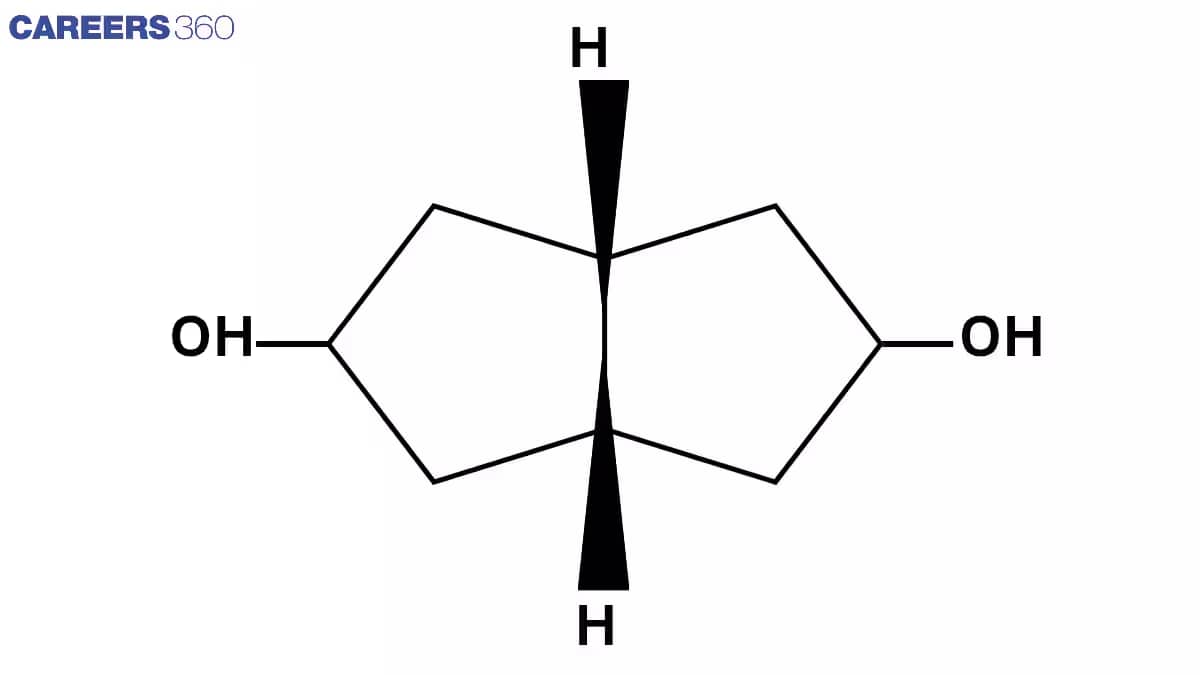
Q7. Number of stereoisomers
Answer:
Insufficient information. The compound or structure must be specified.
![Copy%20of%20Lead_20250202_134226_0000]()
Ans. There are 3 optical centres
No. of Stereoisomers is 2n=23=8
IIT JAM 2026 Preparation Tips – How to Score High
Here are a few IIT JAM 2026 preparation tips that can actually help you plan better, get your concepts in place, and move faster with better correctness so you can score high in the exam, without panicking too much
Know the Exam Pattern and Syllabus a bit early
First, get comfortable with the IIT JAM 2026 exam pattern, the marking scheme, and the subject-wise syllabus. Each subject usually includes MCQs, Multiple Select Questions (MSQs), and Numerical Answer Type (NAT) questions. When you understand the pattern properly, it becomes easier to plan your prep and focus on topics that carry more weight
Make a subject-wise routine that you can follow
Don’t just study randomly; divide your preparation across all subjects and chapters. Give extra time to the tough stuff or the high-scoring portions, but keep a balance between theory and actual numerical practice. A proper timetable makes sure no chapter is ignored and it also cuts down that last-minute stress feeling
Improve conceptual clarity, not just memorisation
Try to understand the basics, core principles, derivations, and formulas, instead of doing pure rote learning. For this, NCERT textbooks and reliable reference books are a strong base for Physics, Mathematics, Chemistry, Biotechnology, or Economics.
Revise the important topics again and again
Revision is non-negotiable. Keep crisp notes, formula sheets, and small topic summaries. Focus on high-yield chapters that show up frequently, and revise them multiple times before the D-day, so everything stays fresh
Manage your time carefully while studying, too
Time management matters during preparation as much as during the exam. Solve questions within time limits, attempt easier questions first, and then use the remaining time for harder ones. Also, don’t spend forever on a single question—if it’s not moving, adjust and continue.