School Of Advanced Engineering, UPES, Dehradun
Ranked #43 among Engineering colleges in India by NIRF | Get Upto 100% Scholarships


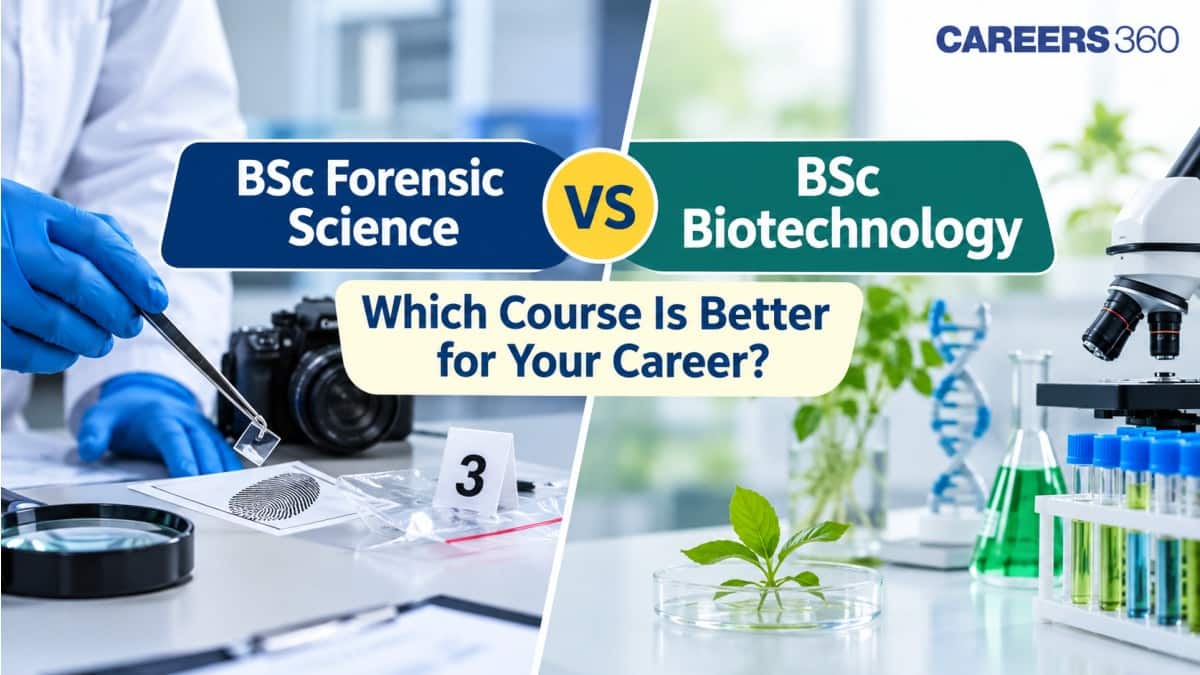
Choosing a science course after Class 12 can be difficult, especially when two courses offer interesting career opportunities. BSc Forensic Science and BSc Biotechnology are both popular choices for students interested in laboratory work, research and science. BSc Forensic Science focuses on using scientific methods to investigate crimes and examine evidence. BSc Biotechnology focuses on using living organisms, biological processes and cells to develop useful products and solutions. This article explains the difference between the two courses, their subjects, salary prospects and career options. It will help students understand which course may be better suited to their interests and future goals.
This Story also Contains
BSc Forensic Science is an undergraduate course that teaches students how science is used to examine evidence related to crimes and investigations. Students learn about DNA, fingerprints, questioned documents and other areas of forensic investigation. The BSc Forensic Science course combines subjects such as biology, chemistry and physics with practical forensic techniques.
Forensic Biology
Forensic Chemistry
Forensic Physics
Crime Scene Investigation
DNA Analysis
Fingerprint Analysis
Forensic Toxicology
Questioned Document Examination
Digital Forensics
Criminalistics
BSc Biotechnology is an undergraduate course that focuses on the use of biological systems to develop products and technologies. It combines biology with chemistry, genetics and laboratory techniques. Students learn how micro-organisms, cells and biological processes can be used in areas such as healthcare, agriculture, food production and environmental science.
Cell Biology
Molecular Biology
Genetics
Microbiology
Biochemistry
Immunology
Genetic Engineering
Plant and Animal Biotechnology
Bioprocess Technology
Bioinformatics
Comparison | BSc Forensic Science | BSc Biotechnology |
Main focus | Scientific examination of evidence | Use of biological systems and technology |
Best suited for | Students interested in crime investigation and laboratory analysis | Students interested in biology, research and biotechnology |
Major subjects | Forensic biology, chemistry, toxicology, DNA analysis | Genetics, microbiology, molecular biology, biochemistry |
Practical work | Evidence collection, laboratory analysis and forensic techniques | Cell culture, microbiology, molecular biology and laboratory experiments |
Career areas | Forensic laboratories, crime investigation, evidence analysis | Biotechnology companies, research laboratories, pharmaceutical and healthcare industries |
Higher studies | MSc Forensic Science, forensic specialisations | MSc Biotechnology, microbiology, biochemistry and related fields |
Government career options | Forensic laboratories and scientific investigation roles | Research institutions, laboratories and scientific organisations |
Career nature | More specialised towards forensic applications | Broader across biological science and biotechnology |
Both courses generally require students to have completed Class 12 with science subjects. Many colleges accept students from the PCB (Physics, Chemistry and Biology) stream, while some may also accept students with other science combinations. The eligibility criteria, minimum marks and admission process depend on the college and university. Students should check the official admission notification before applying.
Both courses offer career opportunities, but the type of work is different.
Graduates can explore careers in:
Forensic science laboratories
Crime scene investigation
DNA analysis
Toxicology laboratories
Fingerprint examination
Questioned document examination
Digital forensics
Research and higher education
Biotechnology graduates can explore careers in:
Biotechnology companies
Pharmaceutical industries
Research laboratories
Food and agricultural biotechnology
Quality control laboratories
Clinical research
Environmental biotechnology
Bioinformatics
Placement opportunities depend on the college, the student's skills, practical experience, specialisation and the type of employer. Forensic Science graduates may find opportunities in specialised laboratories and investigation-related roles. Biotechnology graduates may have access to a wider range of industries, including pharmaceutical, healthcare and research organisations.
Students should not choose a course only because of a college's highest package. It is better to compare:
Course-wise placement data
Average and median salary
Number of students placed
Recruiters
Internship opportunities
Laboratory facilities
Higher-study options
Higher studies can improve career opportunities in both fields.
Students can consider:
MSc Forensic Science
MSc Forensic Biology
MSc Forensic Chemistry
MSc Forensic Toxicology
MSc Digital Forensics
Other related postgraduate courses
Students can consider:
MSc Biotechnology
MSc Microbiology
MSc Biochemistry
MSc Molecular Biology
MSc Genetics
MSc Bioinformatics
Other related postgraduate courses
The right course depends on your interests and career goals.
Enjoy crime investigation and scientific analysis
Are interested in DNA, fingerprints and forensic evidence
Like laboratory work
Want to explore forensic laboratories or investigation-related careers
Are interested in specialised forensic subjects
Enjoy biology and laboratory research
Are interested in genetics, microbiology and molecular biology
Want to explore careers in biotechnology, healthcare or pharmaceuticals
Like learning about biological processes
Are interested in research and higher studies

On Question asked by student community
Hello Student,
You can start preparing for the BSc Nursing entrance exam using these Careers360 resources:
BSc Nursing Entrance Exam Questions with Answers : Practise MCQs and check your answers.
BSc Nursing Entrance Exam : Check entrance exam details and preparation information.
You can practise the questions, review the answers
Hello Student,
Official dates for the Uttar Pradesh B.Sc. Nursing entrance exam (UP CNET) for 2027 are not yet announced by Atal Bihari Vajpayee Medical University (ABVMU). The exam typically takes place in June 2027.
Hope it helps!
Hello Student,
Currently, we do not have AIIMS BSc. Nursing question papers available in the Hindi medium. However, you can access the English-medium question papers using the link below:
Thank you.
Hello Student,
You can check the resources provided below:
Hope this helps!
Hello Student,
You can check the resources provided below:
Hope this helps!

Ranked #43 among Engineering colleges in India by NIRF | Get Upto 100% Scholarships
NEET PG All India & State College Predictor with Admission Process Guide
End-to-End NEET PG Admission Guidance | One-to-One Counselling | College Predictors | Regular Updates | E-books
Ranked #19 by NIRF, NAAC A++ Accredited | Recognized by dental council of India
NAAC A+ Accredited| Ranked #24 in University Category by NIRF
Special Scholarship for Students from Goa (Get an exclusive scholarship of ₹20,000 if you're a Goa-based student) | Bringing Parul Education Trust's 30-year Education Legacy to Goa